
Your Saturday Reading is Here...
Long Reads from Condé Nast Traveler
|
We've got something new to share with you: A mailer dedicated to long, winding travel stories. Because beefore travel was flashing past our eyes in 15-second clips, 20-slide photo dumps, or those massive Facebook albums we so loved in the early aughts, it was scribbled out over thousands of words. Details weren’t something we wanted to rush past—we savored their deliciousness. We wanted stories that didn’t just show us the world, but pull us into its nooks and crannies.
As the senior features editor at Condé Nast Traveler, I’d like to believe that we are collectively boomeranging back toward our desire for leisurely, indulgent armchair travel. We want to clear a Sunday morning for the type of long reads that pick us up and drop us off in the bustling markets of Guadalajara, following a writer who can’t help but succumb to the pleasures of juicy, dribbling tortas ahogadas. We want to feel the wind on our faces as we read about foraging for black currant and sheep sorrel on the shores of Norwegian fishing villages, before supper in a kitchen so remote, it feels like it could fall off the edge of the world. We want to stand in the moving shadow of a total eclipse and look up in awe—or at least, hear the wild goose-chase anecdotes from some of the 460,000 umbraphiles who did just that in Iceland and Spain and Greenland this past August. And if you’ve ever wanted to know what two comedians think of a $12,000-per-week wellness retreat in Southern California, so storied even Marilyn Monroe and Zsa Zsa Gabor flocked here, come along and taste the miso soup beside the koi pond.
This is why we have decided to bring you a monthly Saturday takeover of our Daily newsletter, dedicated to longform storytelling. Here’s how it will work: Every Saturday, a new travel tale will be waiting in your inbox. If you like it and want to share? Just forward the email for all to see. The topics will run the gamut and crisscross the globe. But they will have one thing in common: Like the best trips, these are stories designed to get lost in.
Keep reading...
|
Megan Spurrell
Senior features editor
|
|
In Lofoten, Norway, a Table Is Set Between Peaks and Fjords
Writer Arati Menon heads to Kitchen on the Edge of the World, a four-day event where top chefs harness the Arctic elements and local ingredients to create extraordinary culinary experiences.
“Now you know what it’s like to be in the eye of a storm,” said our hiking guide, Audun Rasmussen, with a grin.
I tried to nod, but the wind whipped it into a wobble. We were nearly 2,000 feet up a steep, multi-edged mountain face, and simultaneously getting pelted by rain. If views over picturesque towns and freshwater lakes below are what is typically promised in this part of Northern Norway, today there’d be none. Instead, fog clung to every nook and crevice of the glacial hulks surrounding us.
|
There was a sense of achievement, certainly. Rain had turned much of our trails into sinking mud, and rock faces to gripless stone. We had used our hands to push past birch and skidded on moss. And we would still have to make our way back down. But for now, we were in the clouds, hiding under rocky overhangs and finding reprieve in reindeer-meat sandwiches, dry fish bites, and chocolate-covered wafers called Kvikk Lunsj that translates to “a quick lunch."
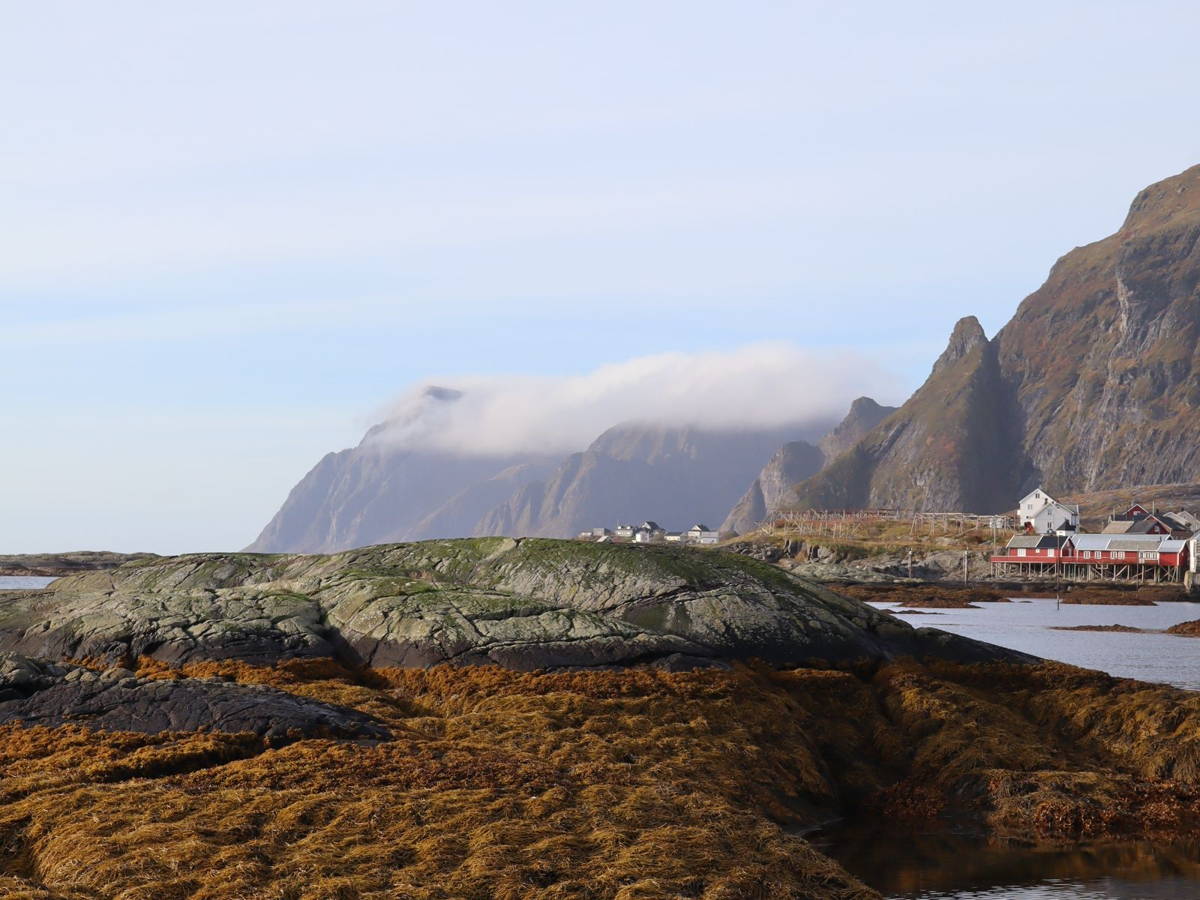
It’s ascents like these, over rock foundations that vastly predate the Jurassic period, that draw close to a million visitors each year to Lofoten Islands. The tiny Norwegian archipelago, 68 degrees north of the Arctic Circle and two flights from Oslo, is a distinctive and dramatic landscape with spiky mountains rising from the Norwegian Sea and sandy beaches fringed by fjords. In summer, buoyed by endless daylight, adventurers arrive from Norway’s mainland to camp, climb, and swim.
But summer was past its twilight when I arrived in late September, and I had come to discover an entirely different side of Lofoten: one found not on its peaks, but on its plates.
|
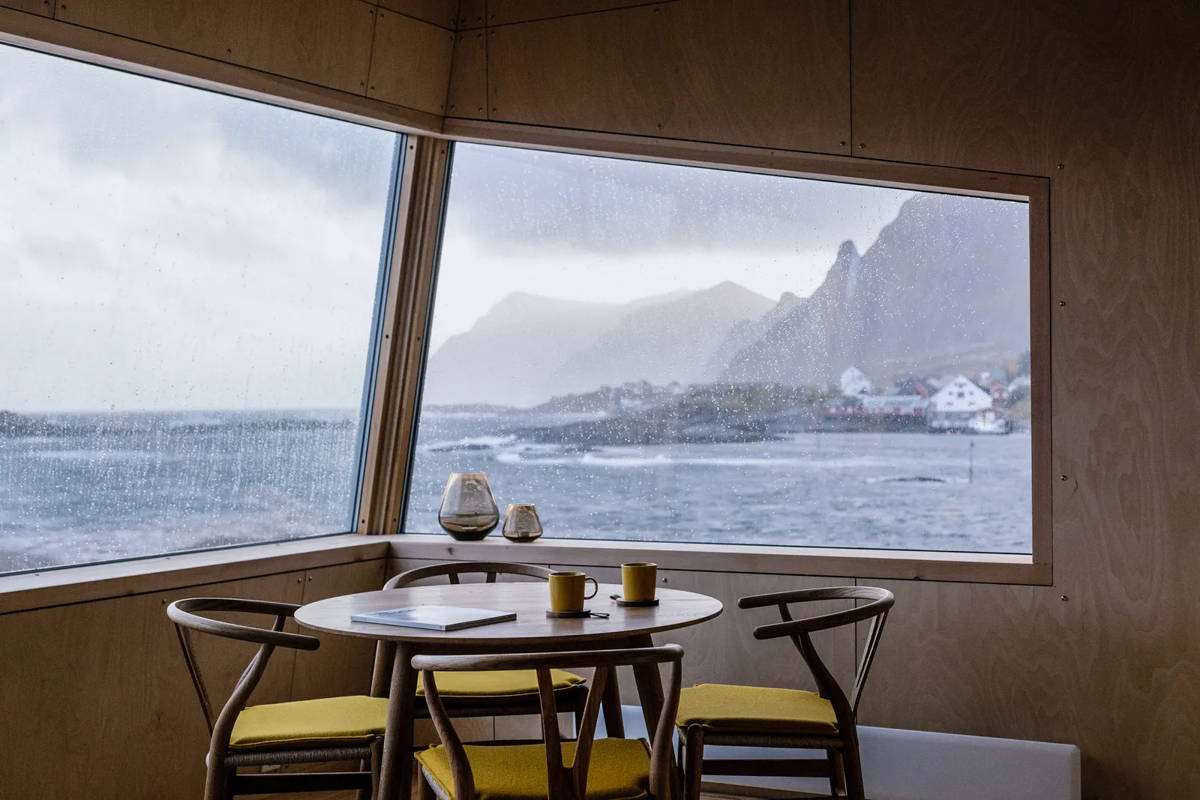
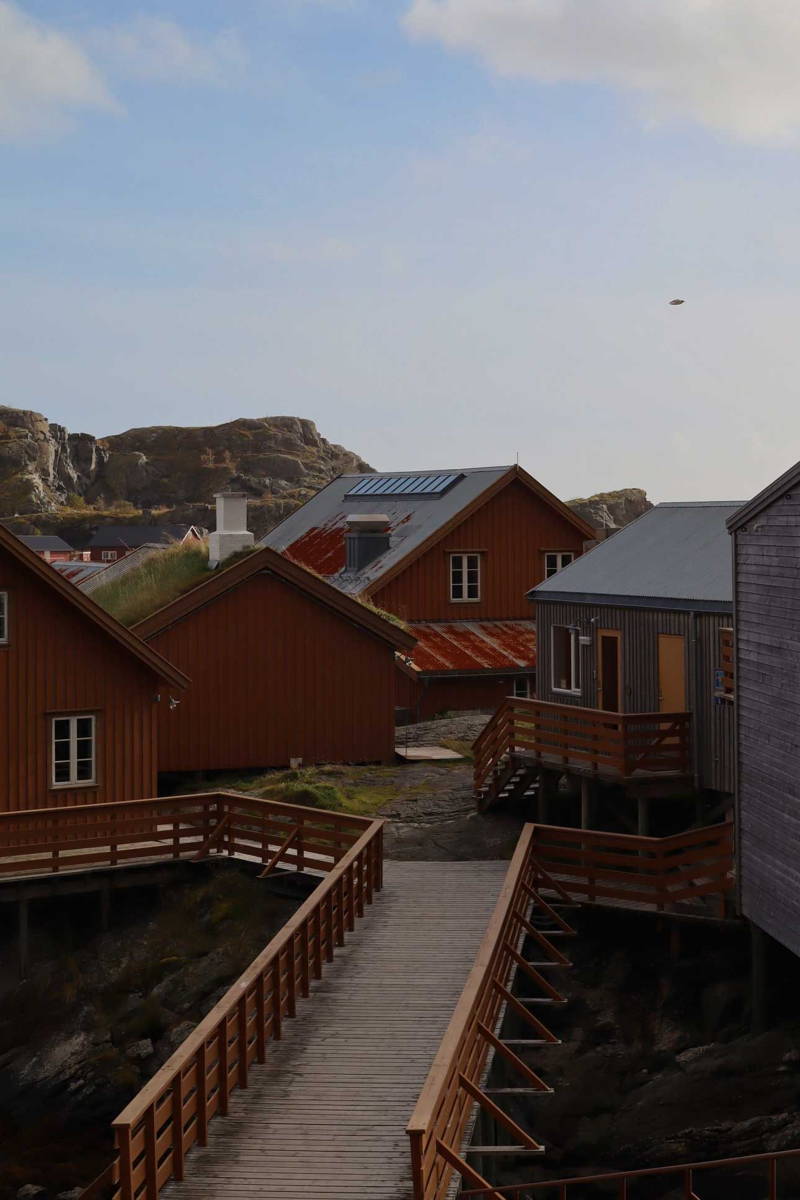
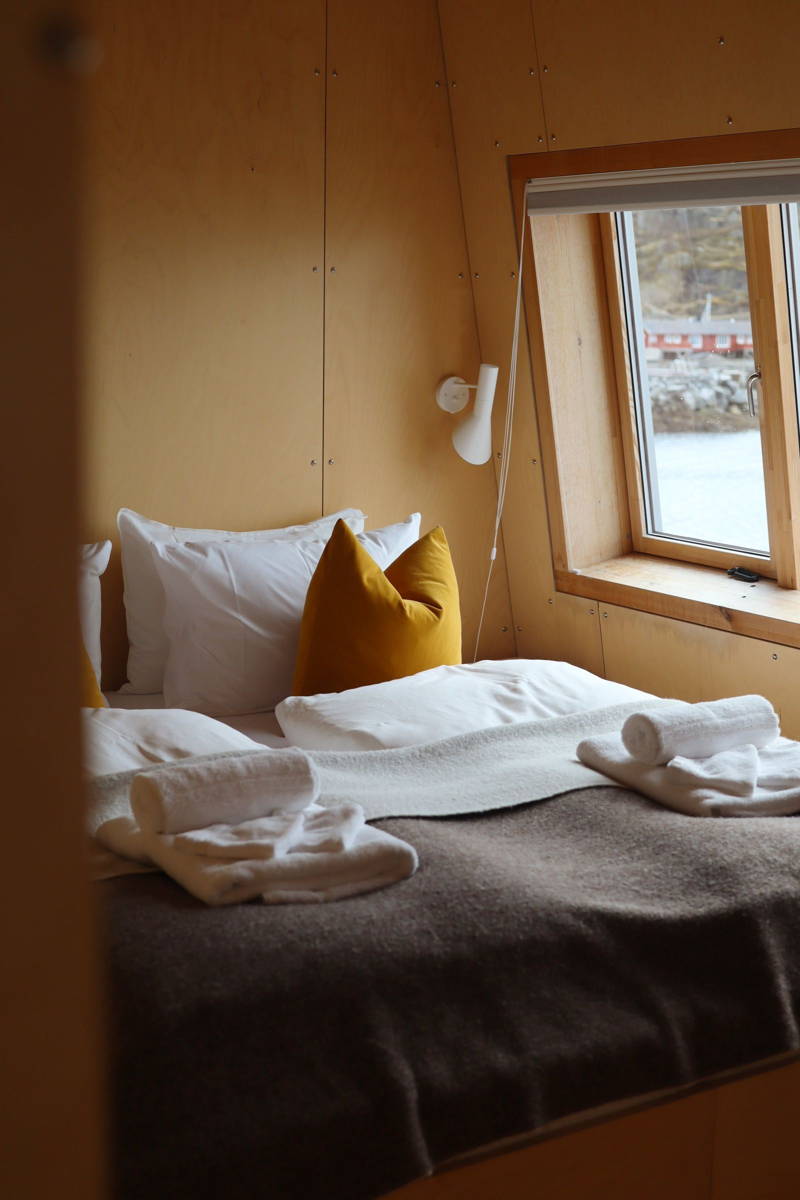
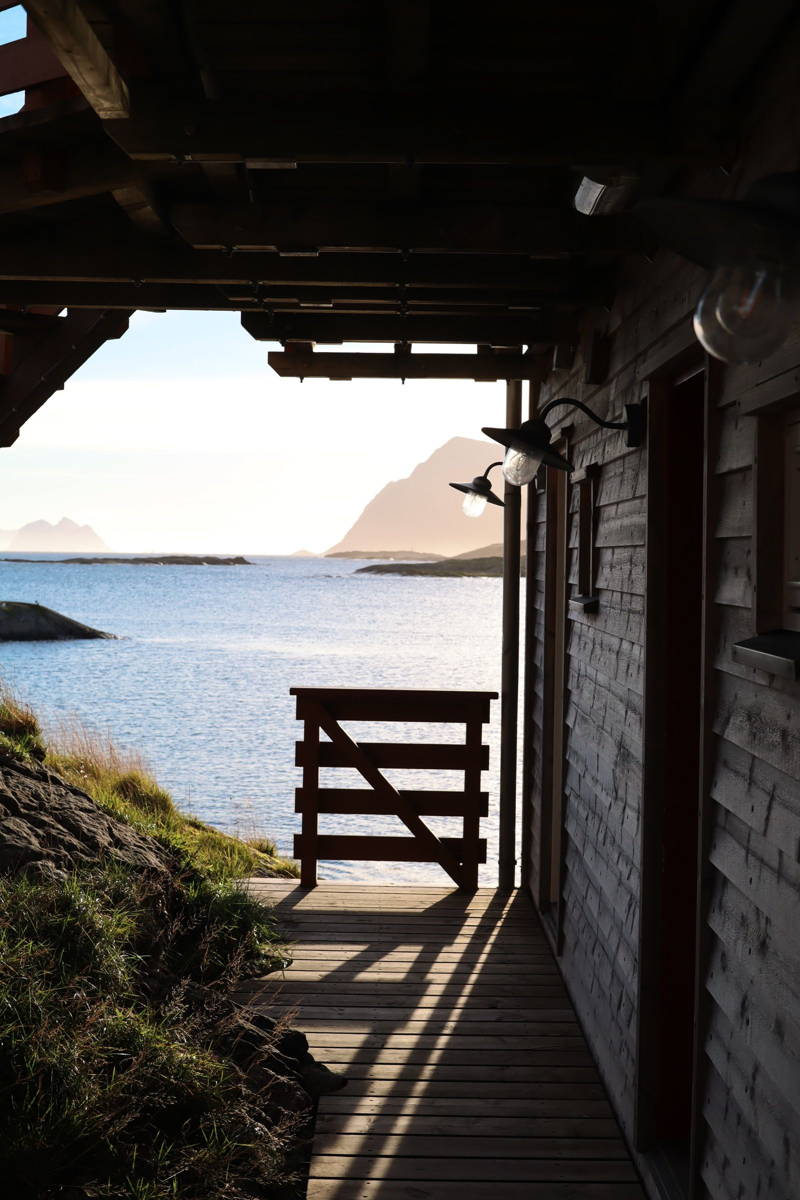
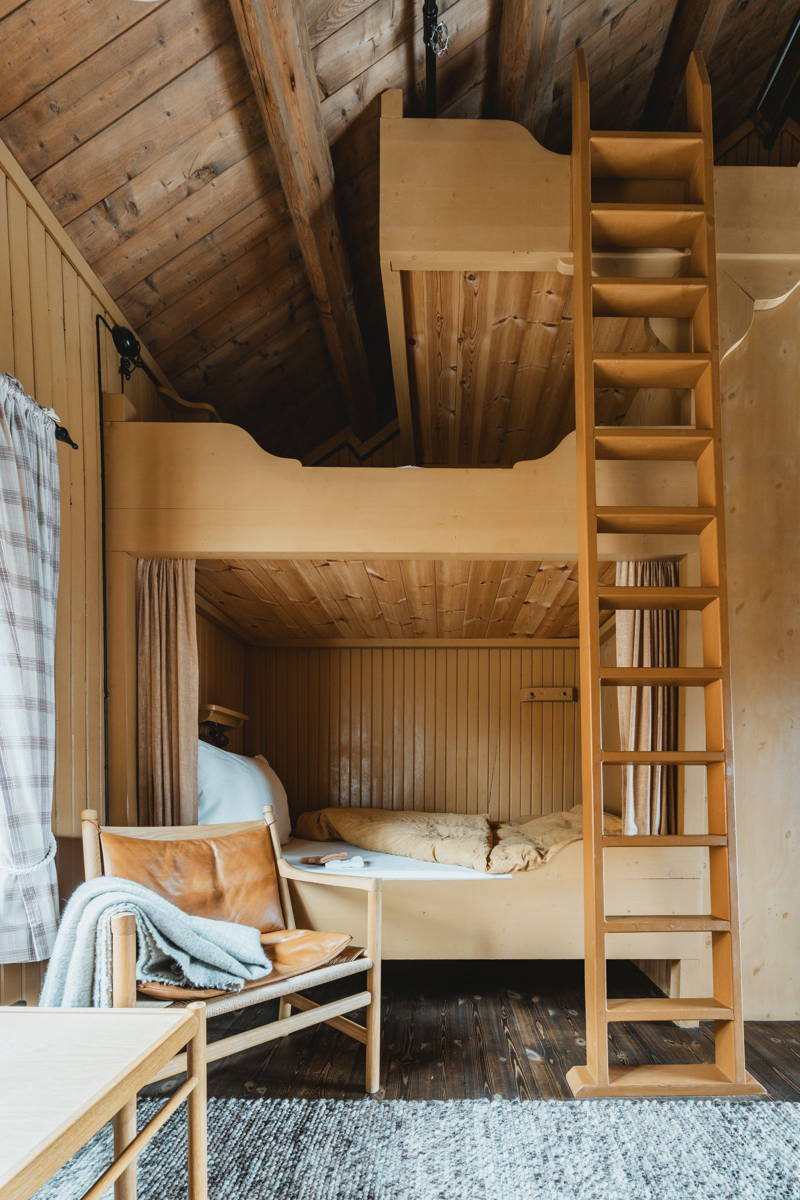
In a wind-whipped corner of Sørvågen, a village in the southwestern reaches of the archipelago, a cluster of mustard-colored cabins on stilts juts out into the sea. Once home to a cod factory, these buildings have been transformed into Holmen Lofoten, a unique culinary destination and hotel that has welcomed food lovers and adventurers from around the world since 2007. The traditional fishing cabins, known as rorbuer in Norwegian, are distinguished by their corrugated roofs, some of which are topped with insulating grass. Walkways connect the buildings to each other and to wooden decks facing the sea. Inside the guest rooms, large picture windows frame the shoreline. With its simple local furnishings and hand-hewn charm, everything about this place feels elemental.
|
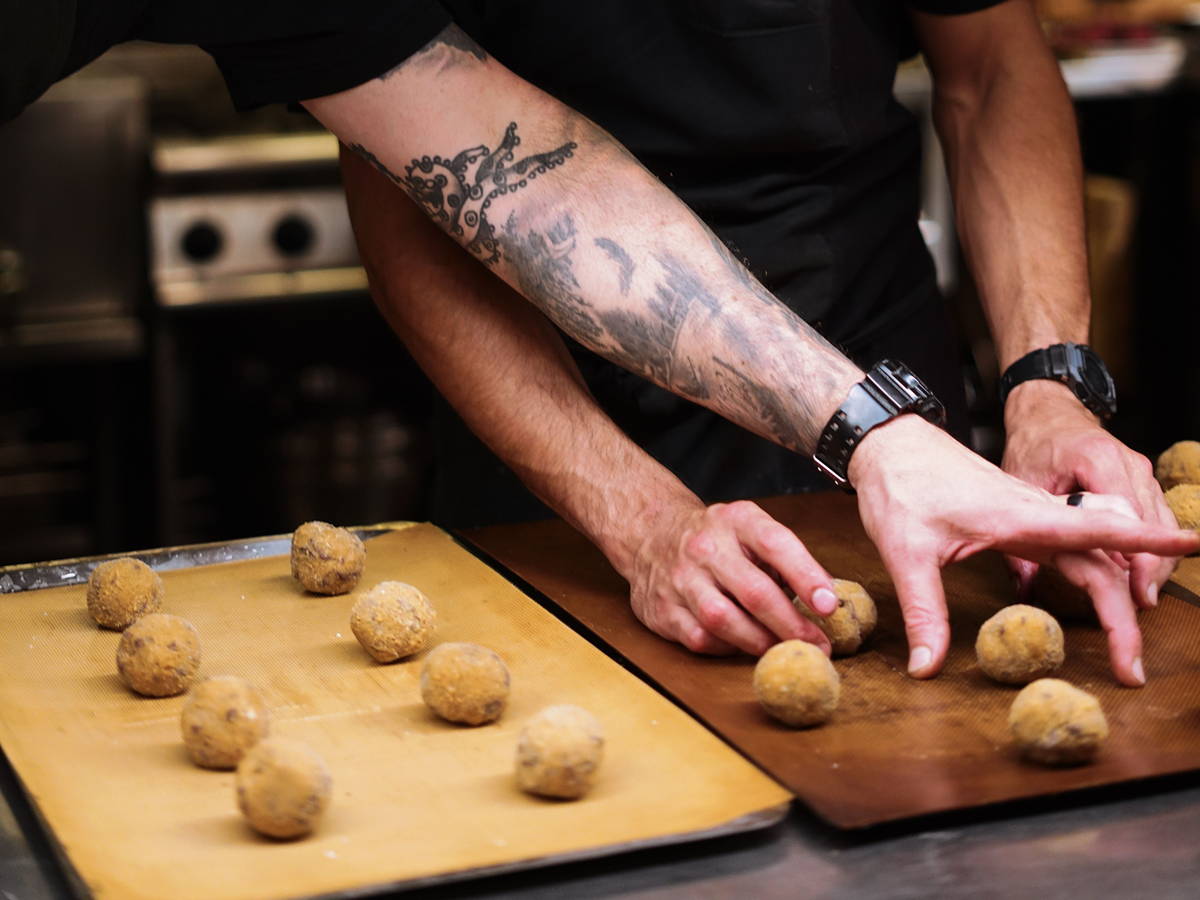
During my four-day stay, Holmen would play host to Kitchen on the Edge of the World, an extraordinary culinary adventure launched in 2018 that welcomes acclaimed chefs into its kitchen four times a year, and brings guests around the table—and out into the surrounding wild. This, the 30th edition, would be helmed by Matt Orlando, a California-born, Copenhagen-based chef who has worked at some of the world’s most influential kitchens like The Fat Duck in London and Per Se in New York. For our part, we would feast and drink to our hearts’ content, with the landscape that nurtures every dish spread out just beyond the windows.
Ingunn Rasmussen, the warm, chatty matriarch behind Kitchen on the Edge (and hiking guide Audun's sister), took over the property in October 2001 and now runs it with her son, Håvar Holmen. “I wanted to build a space that felt like home, where we could all log off and reconnect with our natural roots,” she said when she picked me up from the airport. A fisherman's daughter, she grew up around this very site—in fact, one of the cabins still bears her sister’s childhood scribbles on the wall. After a period abroad, Ingunn returned determined to breathe life back into this corner of Lofoten. What followed was a meticulous restoration focused on preserving the original structures and historical details, and eventually, the addition of a couple of new buildings in the same vernacular to accommodate larger suites.
|
On the first night of the multi-day event, we gathered in the living room above the kitchen. Like all of Holmen’s shared spaces, it is defined by rustic interiors, exposed beams, and raw, sculptural elements—foraged flora, taxidermy, found objects—that echo the weathered landscape outside. That evening’s dinner would be helmed by Holmen’s own chefs, a young and talented assemblage from as far as Sicily and Piauí, in the northeast of Brazil.
Trays circulated with shrimp croustades and cocktails that looked like Negronis but told a more local story: the vermouth was infused with foraged blackcurrant leaves, and the Campari steeped with dried berries and yarrow flowers. Each sip seemed to capture the autumnal palette I’d seen blanketing the hillside on our drive in. The nonalcoholic version was just as heady: an elderflower tonic with a syrup made from freshly picked wild hops from nearby. “Holmen was created because we want to show our guests the Lofoten Islands,” said Ingunn. “And food is a critical part of understanding it.”
|
I wandered over to Mia Hjorth Hansen, co-owner of Gedulgt, a cocktail bar in Aarhus, Denmark, and resident mixologist at Kitchen on the Edge. Shelves around her workstation held glass jars filled with foraged and dried ingredients—cornflower, dandelion, and fireweed—that she was transforming into elixirs. While visiting chefs rarely return, Hansen is an exception: this is her twelfth Kitchen on the Edge. Still, there's been a through-line among the chefs. Whether Ana Roš, the renowned Slovenian chef behind the three-Michelin-starred Hiša Franko, or Simon Rogan, the UK pioneer of the farm-to-table movement, each has shared a commitment to land stewardship. “We take time picking them,” says Ingunn, “because we want [chefs] who will be considerate about the people and wildlife that make this [our] home.”
The first night of the event is always designed to be an icebreaker, and Ingunn warned us we’d be surprised by how quickly we’d grow comfortable sharing close quarters over the four days. We were a motley crew...
|
|
An Old Friend Returns to Women Who Travel
|
This e-mail was sent to you by CONDÉ NAST TRAVELER. To ensure delivery to your inbox (not bulk or junk folders), please add our e-mail address, condenasttraveler@newsletter.cntraveler.com, to your address book.
Copyright © Condé Nast 2026. One World Trade Center, New York, NY 10007. All Rights Reserved
|






Comments
Post a Comment